Keynote Speakers
We are pleased to present the following distinguished keynote speakers for ICBL 2026: Blended Learning: Innovations for Future Education.

Prof. Josep Duart
Professor in Psychology and Educational Sciences Departmentn
Universitat Oberta de Catalunya, Spain
Speaker Bio
Full Professor of Educational Technology and Leadership at the Universitat Oberta de Catalunya (UOC). Doctor in Pedagogy (1998) and a Master in Business Administration (MBA) (2002). Research professor in educational technology, educational organisation, leadership and quality of education at the Faculty of Psychology and Educational Sciences of the UOC. Director of the Postgraduate Course in Leadership and Management of Educational Centres at the UOC. He has directed and participated in research projects related to the educational use of ICT. He has published several books and scientific articles in the international journals of impact (ORCID). Dr Duart is a former President of EDEN (Digital learning Europe), Europe’s leading network in Digital Education. Is the founder Editor in Chief of the International Journal of Educational Technology in Higher Education, a peer-reviewed scientific journal in e-learning, Q1 in JCR and Scopus. He is also a member of “The University of the Future Network" and coordinator of REDUNETE, a network of Colombian universities for using technology in education
University Leadership in AI-Driven Digital Transformation: A European Perspective Through the TOP Model
Abstract. The rapid advancement of artificial intelligence (AI) is fundamentally reshaping higher education systems worldwide, compelling universities to reconsider their missions, governance structures, and leadership models. This article examines the evolving role of university leadership in the context of AI-driven digital transformation, adopting the Technology–Organization–Pedagogy (TOP) model, developed by the Edul@b Research Group at the Universitat Oberta de Catalunya (UOC), as an analytical framework. Grounded in the European higher education tradition, with its particular commitments to quality assurance, inclusivity, and public value, the paper identifies the principal challenges and opportunities associated with integrating AI into teaching, learning, and institutional governance. Drawing on a range of foundational scholarship, including UNESCO’s Guidance for Generative AI in Education and Research (2023), systematic reviews of AI in higher education (Crompton & Burke, 2023), critical perspectives on the limits of AI (Selwyn, 2024; Molenaar, 2022; Luckin, 2018), a literature review on e-leadership for technology-enhanced learning (Arnold & Sangrà, 2018), and the Bologna Digital 2020 White Paper (Rampelt, Orr, & Knoth, 2019), the article argues that effective leadership must move beyond technological adoption toward systemic transformation, emphasizing ethical responsibility, organizational culture change, and genuinely human-centered approaches to educational design. Strategic directions for university leaders are proposed within each dimension of the TOP model, and the relevance of a productive East-West dialogue, particularly between European quality assurance traditions and China’s leadership in AI development and deployment, is explored.
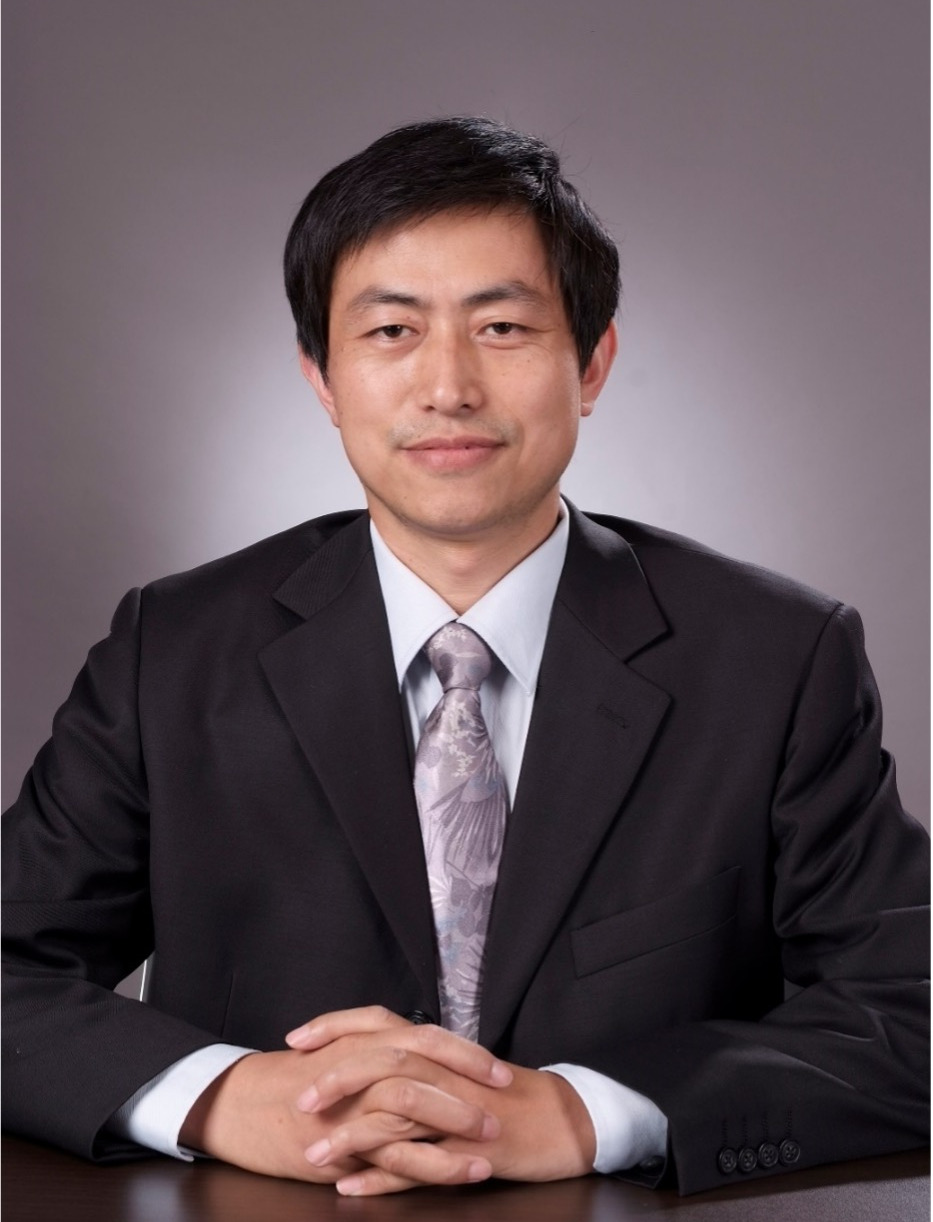
Prof. Jiyou Jia
Professor and Head of the Department of Educational Technology, Graduate School of Education
Peking University, China
Speaker Bio
Dr. Jiyou Jia is a full professor and the Head of the Department of Educational Technology, Graduate School of Education, Peking University, China and is also the founding director of International Research Center for Education and Information at Peking University. He serves concurrently as the Vice Principal of Science at Xinxin School Affiliated to Peking University High School. He is the responsible professor for the national-level online and offline blended first-class undergraduate course "Education and Artificial Intelligence". He was invited to work as a guest professor by School of Education, Technical University of Munich and visiting professor by Free University Berlin, Germany, a Distinguished Professor at Institute for Research in Open and Innovative Education, the Open University of Hong Kong China, and a visiting professor by the Education University of Hong Kong China.
Dr. Jia received B. S. and Master of Education from Peking University, and Ph.D. in artificial intelligence from Augsburg University, Germany. His research interests include educational technology and artificial intelligence in education, especially in TELL (Technology Enhanced Language Learning), STEM education with ICT, and decision making support system. He has been responsible for a dozen of national projects and international cooperation projects. His research has won a number of national and international prizes including Outstanding Paper Award from Emerald Publishing, the First Class Award of the Fifth National Award for Outstanding Achievements in Educational Research, from Ministry of Education, China, 2016.
Dr. Jia has published more than 200 articles in internationally or nationally peer-reviewed journals and conferences including Computers and Education, Knowledge-Based Systems, etc. He has edited or authored four books in English and published by IGI Global, Springer Nature, or Peter Lang. He is also the author of three Chinese book and one book in German. He serves as an associate editor for the journal of Instructional Science which is listed in SSCI Q1, a co-chair of more than 20 international conferences including ICCE, ICALT and GCCCE, and an advisory expert for some scientific and governmental organizations.
Education Technology and Artificial Intelligence (AI) Empowers Education: Cases from Peking University, China
Abstract. Information Communication Technology and Artificial intelligence technology have made remarkable achievements in the past decade, and these breakthroughs have provided impetus for the development and transformation of education, for example to provide individualized teaching and learning, to implement the policy documents issued by the central government on the assessment reform of primary and secondary school students and reducing the burden and increasing the efficiency. This speech will introduce two AI systems designed by the speaker’s team from Peking University, as well as their application in education and the corresponding effect evaluation: The English instruction System CSIEC (Computer Simulation in Educational Communication) V2.0, and the intelligent mathematical assessment and tutoring system MIATS V2.0.

Prof. Ning Ma
Dean, School of Educational Technology, Executive Director of the Artificial Intelligence Education Laboratory, Faculty of Education
Beijing Normal University
Speaker Bio
Prof. Ning MA, served as the dean of the School of Educational Technology, the executive director of the Artificial Intelligence Education Laboratory, Faculty of Education, Beijing Normal University. She also served as the deputy director of the "Mobile Learning" Joint Laboratory of the Ministry of Education and China Mobile Communications Corporation. Her research focused on intelligent technology-enhanced learning, technology-enhanced teacher professional development, big data and learning analytics, and STEM education. She has led and participated in dozens of international, national, provincial, and ministerial-level scientific research projects, and has conducted in-depth research and practice in the fields of educational informatization, educational reform in an information-based environment, teacher professional development, and STEM curriculum design and development. She has published more than 120 papers, books, electronic publications, and other works.
GenAI Empowered Interdisciplinary Deep Learning: Theoretical Frameworks and Technical Pathways in Blended Environments
Abstract. Interdisciplinary learning has emerged as an effective pedagogical approach for cultivating learners’ interdisciplinary competencies and promoting holistic educational outcomes in blended learning environments. However, interdisciplinary learning continues to be constrained by epistemological tensions, structural fragmentation, and delayed evaluation feedback, which hinder its progression from mere disciplinary juxtaposition to genuinely integrated, deep interdisciplinary knowledge construction. This study systematically reviews the conceptual foundations of interdisciplinary learning and interdisciplinary deep learning, and conceptualizes the structural dimensions of interdisciplinary competencies encompassing interdisciplinary knowledge, thinking, practice, and values. A four-level cognitive progression mechanism is further explicated, comprising descriptive construction, relevance construction, systemic construction, and innovative construction. From the perspective of generative artificial intelligence (GenAI) empowerment, four technological pathways are proposed to facilitate interdisciplinary deep learning: problem representation based on generative contexts, semantic network connectivity under distributed cognition, resource integration and systematic cognitive modeling, and meaning negotiation and critical dialogue regulation. This study offers both theoretical insights and technological implications for advancing the high-quality and intelligent transformation of interdisciplinary learning in the context of educational digitalization.

Prof. Minjuan Wang
Assistant Vice President (Interdisciplinary Studies and Partnership), Chair Professor of Emerging Technologies and Future Education
The Education University of Hong Kong
Speaker Bio
Minjuan Wang (Stanford Top 2% Scientist), Peking University alumna, Shanghai “Oriental Scholar,” and Hainan Province Overseas Distinguished Professor. Currently serves as Assistant Vice President (Interdisciplinary Studies and Partnership); Chair Professor of Emerging Technologies and Future Education at The Education University of Hong Kong, PhD supervisor, and Co-Director of the Global Institute for Emerging Technologies, as well as Editor-in-Chief of IEEE Transactions on Learning Technologies. As an internationally influential scholar in the field of educational technology, Professor Wang is fluent in both Chinese and English, deeply understands cultural differences between China and the U.S., and possesses a global academic vision and innovative thinking. She is dedicated to research on the application of XR, AI, and AIGC in various disciplines, and has delivered keynote speeches at about 50 international conferences. She also has extensive experience in international teaching and academic exchange and has accumulated a rich portfolio of scholarly publications.
Agentic AI Unleashed: Power, Promise, and Ethical Frontiers
Abstract. Artificial Intelligence is evolving from passive tools to autonomous agents capable of making decisions, pursuing goals, and interacting dynamically with complex environments. This keynote explores the transformative potential of Agentic AI—systems endowed with agency—and the profound ethical questions they raise. We will examine real-world applications across healthcare, education, finance, and scientific discovery, highlighting how agentic systems can accelerate innovation and reshape human-AI collaboration. At the same time, we confront critical challenges: accountability for autonomous decisions, transparency in algorithmic reasoning, and the alignment of machine objectives with human values. By mapping the ethical frontiers and proposing frameworks for responsible deployment, this session invites researchers, policymakers, and industry leaders to envision a future where agentic AI amplifies human potential without compromising societal trust.
Conference Organizers

Conference Co-Organizers




Technical Sponsor

Conference Sponsor